
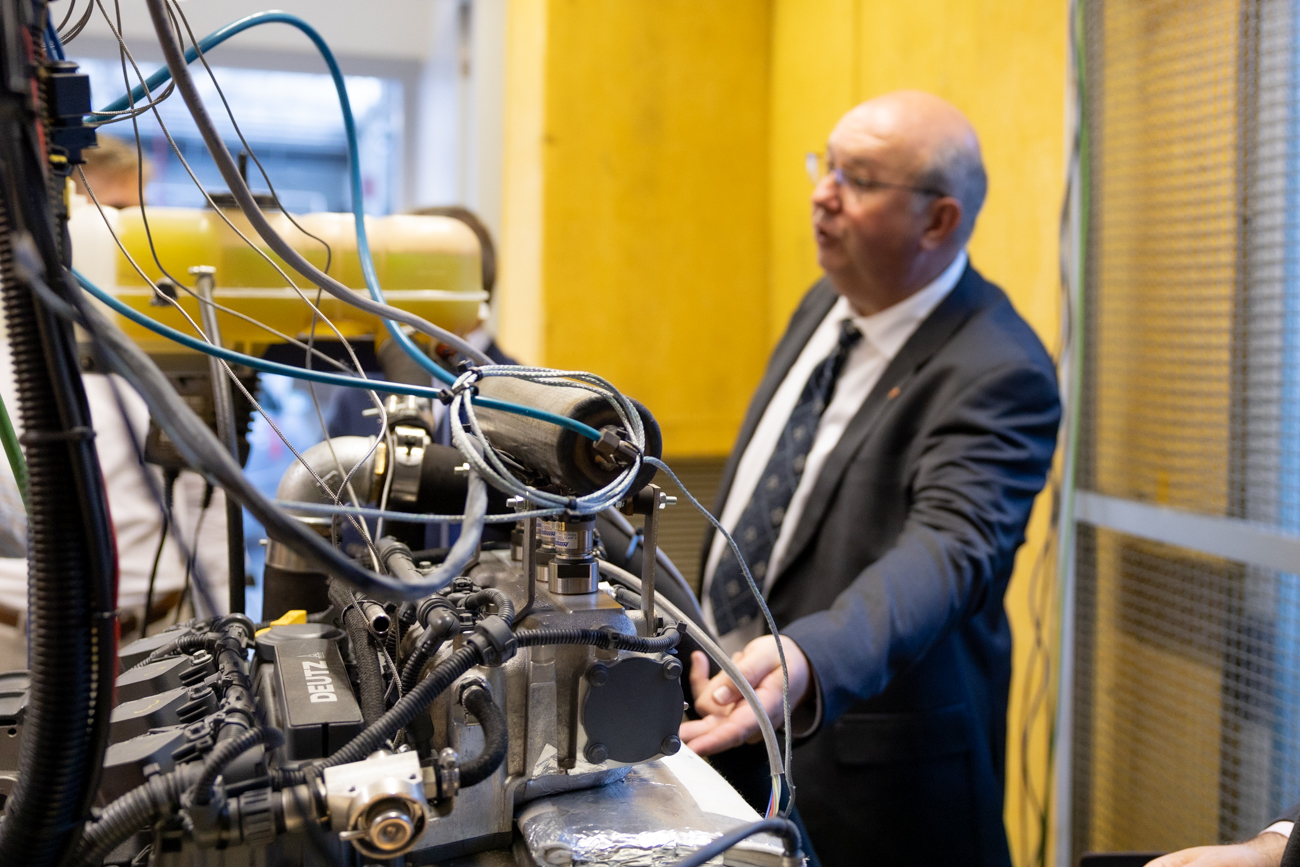
After three years of work, Tafalla Iron Foundry (TIF) has completed an R&D project to enable internal combustion engines to run on hydrogen. The cooperative carried out the research with the Public University of Navarra (UPNA) and German multinational DEUTZ, one of its main customers. The outcome is an in-house method to assess how its castings behave in the presence of hydrogen, and an engine that can run on hydrogen, petrol, methanol or ethanol, either alone or blended.
DEUTZ joined the existing agreement between TIF and the university in 2024, its first collaboration with an academic institution outside Germany. Besides providing the engine, the company contributed technical documentation and advised the team during testing. DEUTZ explained that, for an engine manufacturer, the transition to hydrogen does not begin with combustion, but with materials.
Castings put to the hydrogen test
TIF and UPNA’s Department of Materials analysed 45 test specimens of three different types of cast iron, charged with hydrogen to simulate engine operating conditions. The tests show no significant differences in their mechanical properties after exposure. Microscope analysis did, however, detect small internal pores where the gas accumulates, so both partners plan to extend the study.
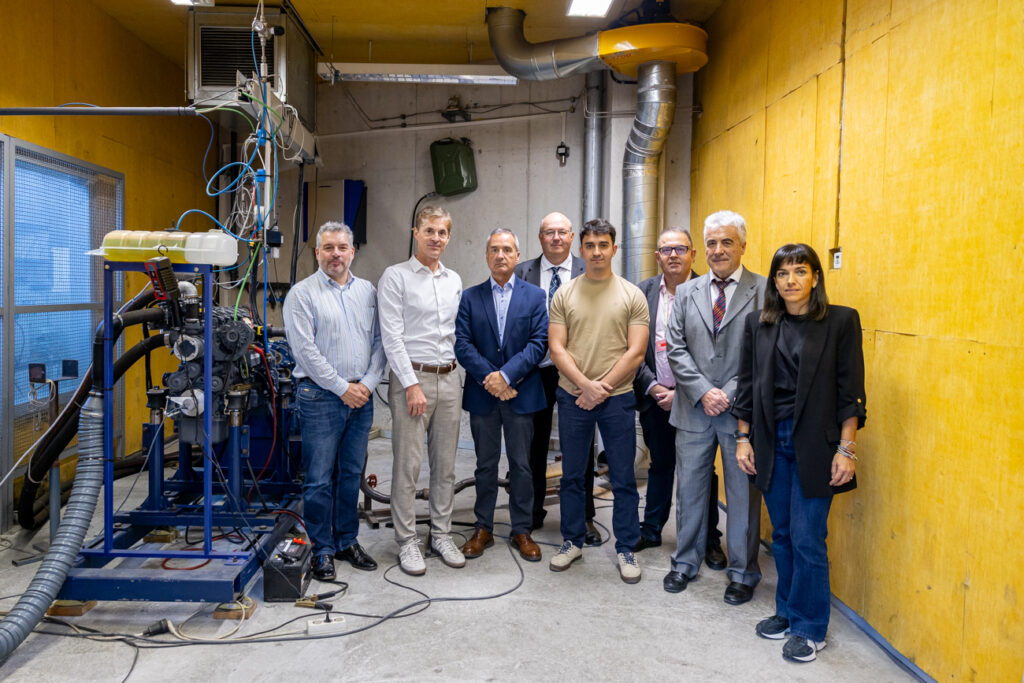
“We are closing the project with our own knowledge of how our castings behave when working with hydrogen. That is what allows us to support our customers in designing the engines of the future, rather than simply manufacturing their parts,” said Atenea Romero, project manager at TIF and head of the initiative.
A multi-fuel engine
In parallel, UPNA’s hydrogen group, led by Pedro Diéguez, converted the petrol engine provided by DEUTZ. Running on hydrogen alone, emissions fall significantly, although power drops. To recover it, the researchers tested blends that keep emissions low while matching the performance of the conventional engine.
One of the most notable advances has been the control of knocking, an abnormal combustion that is common with such a reactive fuel. The team developed software that injects a small amount of petrol or water when the engine is about to knock. UPNA presented this work at the European Hydrogen Energy Conference, held in Seville last March.
The collaboration will continue with new lines of work on materials, such as repeated-load testing and trials on hydrogen engines in operation.
Projects like this reflect the role of Navarra’s industry in developing hydrogen-related solutions, one of the strategic areas of the Navarra Net Zero Tech Acceleration Valley, which aims to strengthen collaboration between companies and knowledge centres.
The project was 65% co-financed by the European Union through the Interreg VI-A Spain-France-Andorra Programme (POCTEFA 2021-2027).
Source: Diario de Navarra